The Many Faces of Color…
August 15, 2018
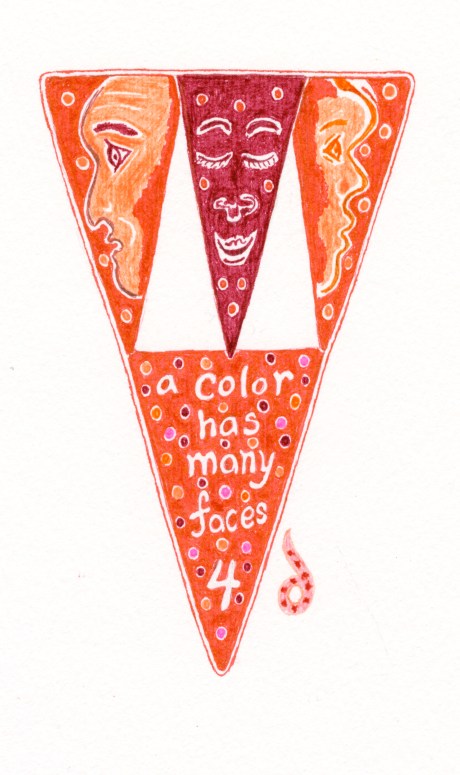
Babylonian 4: a color has many faces that are reflected in experiences that are relative in nature. Observations of color within different contexts creating deceptive optical illusions. Design by Meredith Eliassen, 2018.
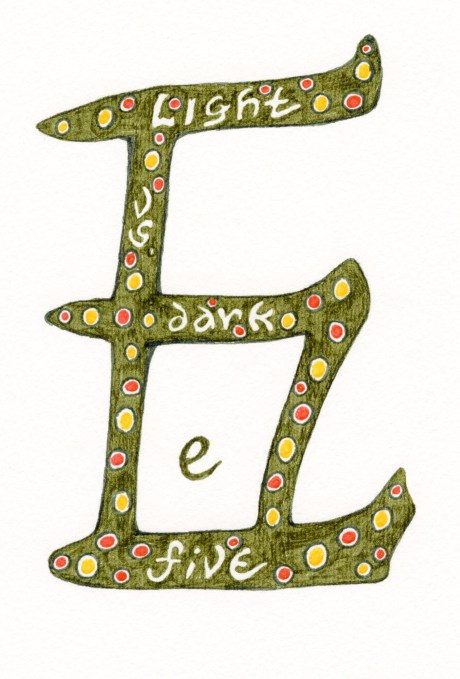
Chinese 5: Our eye’s ability to adjust its retina is a means to adjust to higher or lower light condition; when seeing gradual gradations between light and dark, humans are often unable to distinguish between subtly lighter or darker colors so that some shades of gray get lost. Design by Meredith Eliassen, 2018.
Deceiving color
August 14, 2018
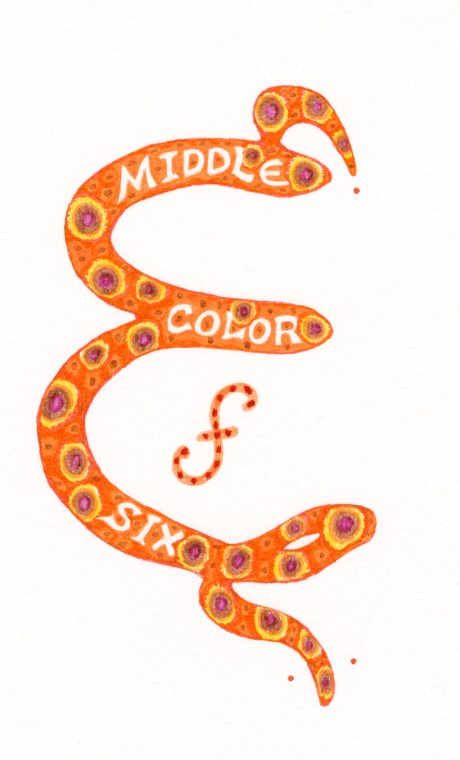
Hindu 6 illustrates the concept of middle color to show that color performs simultaneous functions. Design by Meredith Eliassen, 2018.
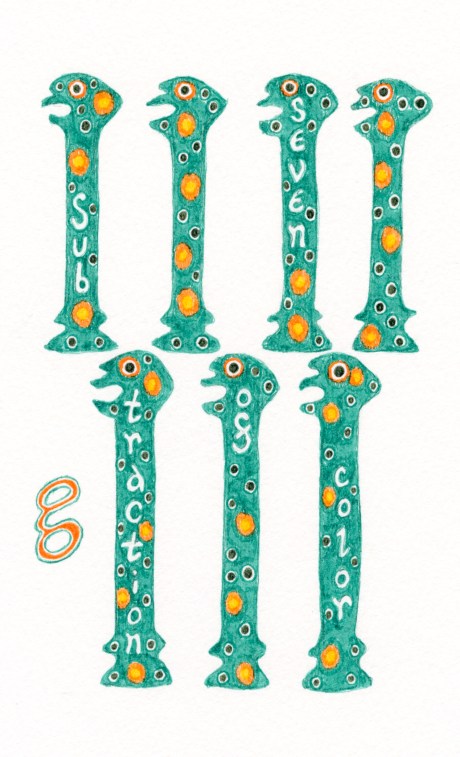
Ancient Egyptian 7 illustrates the concept of the subtraction of color to show that color can perform many roles. Design by Meredith Eliassen, 2018.
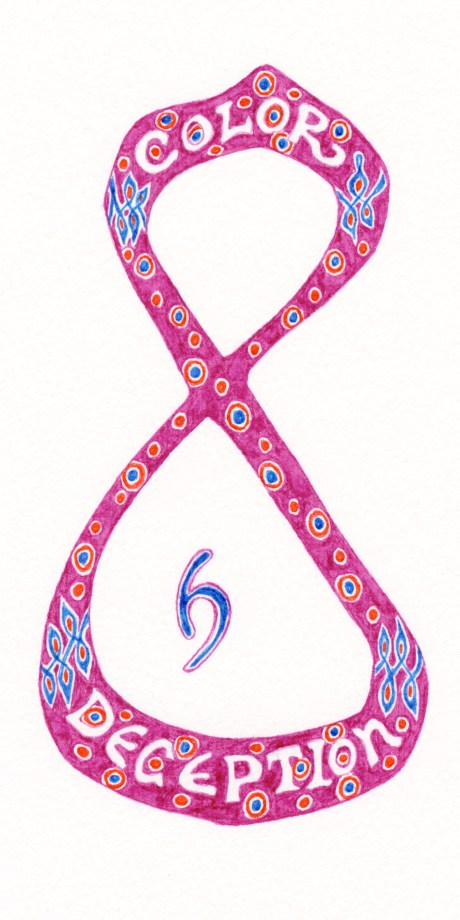
Ancient Roman 8 illustrates after-image color deception. The human retina receives three primary colors (red, yellow, or blue); by staring at the red, it becomes fatigued and sensitive to red sections so that a subsequent sudden shift of focus to white will cause the mine to perceive red’s complimentary color. Design by Meredith Eliassen, 2018.
To purchase other designs as cards from Zazzle.
Color’s illusions…
August 13, 2018
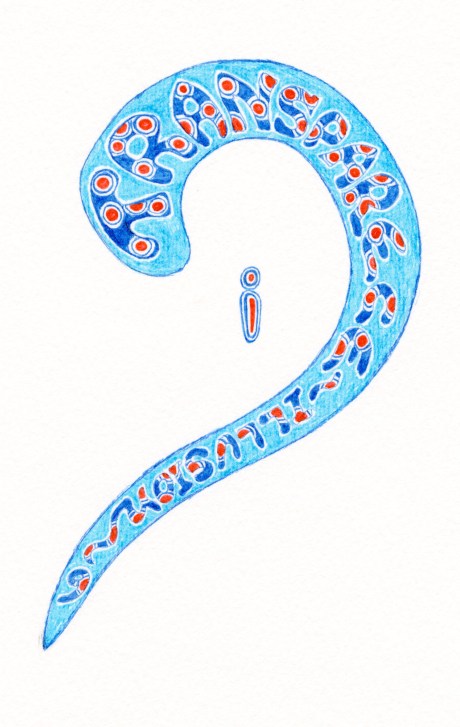
Ancient European 9, circa 12th century illustrates the illusion of transparence when color mixture leads to a loss of opacity so that it appears transparent or translucent. Design by Meredith Eliassen, 2018.
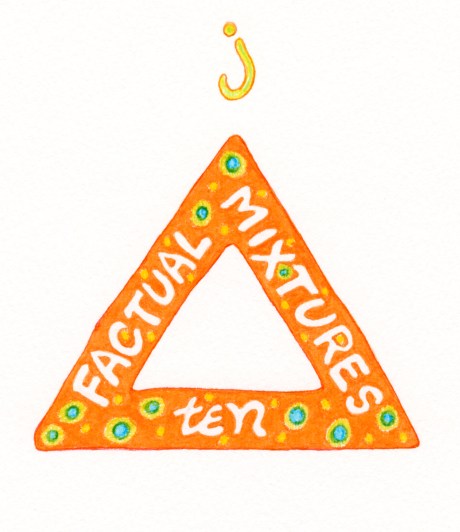
Greek 10 shows that transparent illusions occur as color gains light only in direct color.
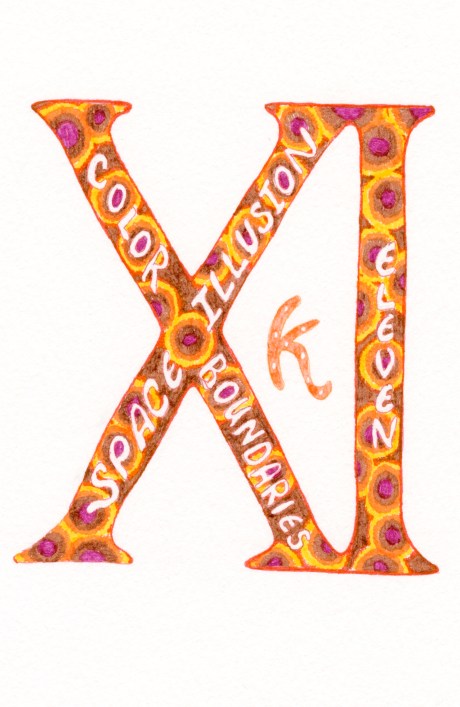
Roman 11 illustrates color boundaries and plastic action, a space-illusion employed by Paul Cézanne (1839-1906), design by Meredith Eliassen, 2018.
 MME Designs's Weblog