Women and Historic Social Networking
October 3, 2014
Today the Internet offers women infinite ways of networking socially. Women’s demographic numbers and resources get exploited without equitable representation. Charities advertised the chance to walk for this or run for that cause in order to raise money (or “awareness), but these efforts are also supporting fundraising infrastructures. Women have historically fought to have their voices individually and collectively heard, women have collectively built institutions only to have those institutions usurped by men who asserted that women should to heed collective male expertise. Themes of dependency, poverty, gender, and ultimately mortality delineated how women traditionally networked until the late-nineteenth century. During wartime, women’s social networks sustained their broader communities. Women left to support families when men fathers, brothers and husbands were killed or disabled utilized female skills and artistry to support families, and to hold and maintain family property. However, after the conflicts ended, women were relegated to more dependent roles. Prior to women suffrage, women did not have government representation and were treated as dependents. Excluded from political and economic responsibilities, women collectively focused on their reproductive duties.
In some hunter/gatherer societies women were isolated from men during menstruation. This fundamental dichotomy has been manifested in diverse ways throughout time and across cultures. Midwives served integral roles in traditional female networking. During the eighteenth century, up to 45 percent of women did not survive to the age of fifty years, usually due to complications from childbirth. The skilled midwife within a community was essential to the wellbeing of women in that community until male physicians entered the birthing chamber during the late eighteenth century. A woman’s childbearing years, a period lasting about twenty-five years, along with distractions during her child rearing duties, cumulatively weakened her ability to network beyond her neighborhood or immediate community.
Female networks often centered on food cultivating, harvesting, and preparation. Women used raw natural materials to construct practical items for survival. Women were charged throughout the seasons with harvesting, preserving, and cooking food to make the best use of these resources that including working in the dairy, making butter and cheeses; preserving meat from the hunt and fish; preserving fruits and vegetables, and bee keeping. Women gathered and made baskets to store or carry foodstuffs, water, or other items that exhibited design motifs identifying the community in different regions depending upon the availability of local grasses, bark, twigs, and willow.
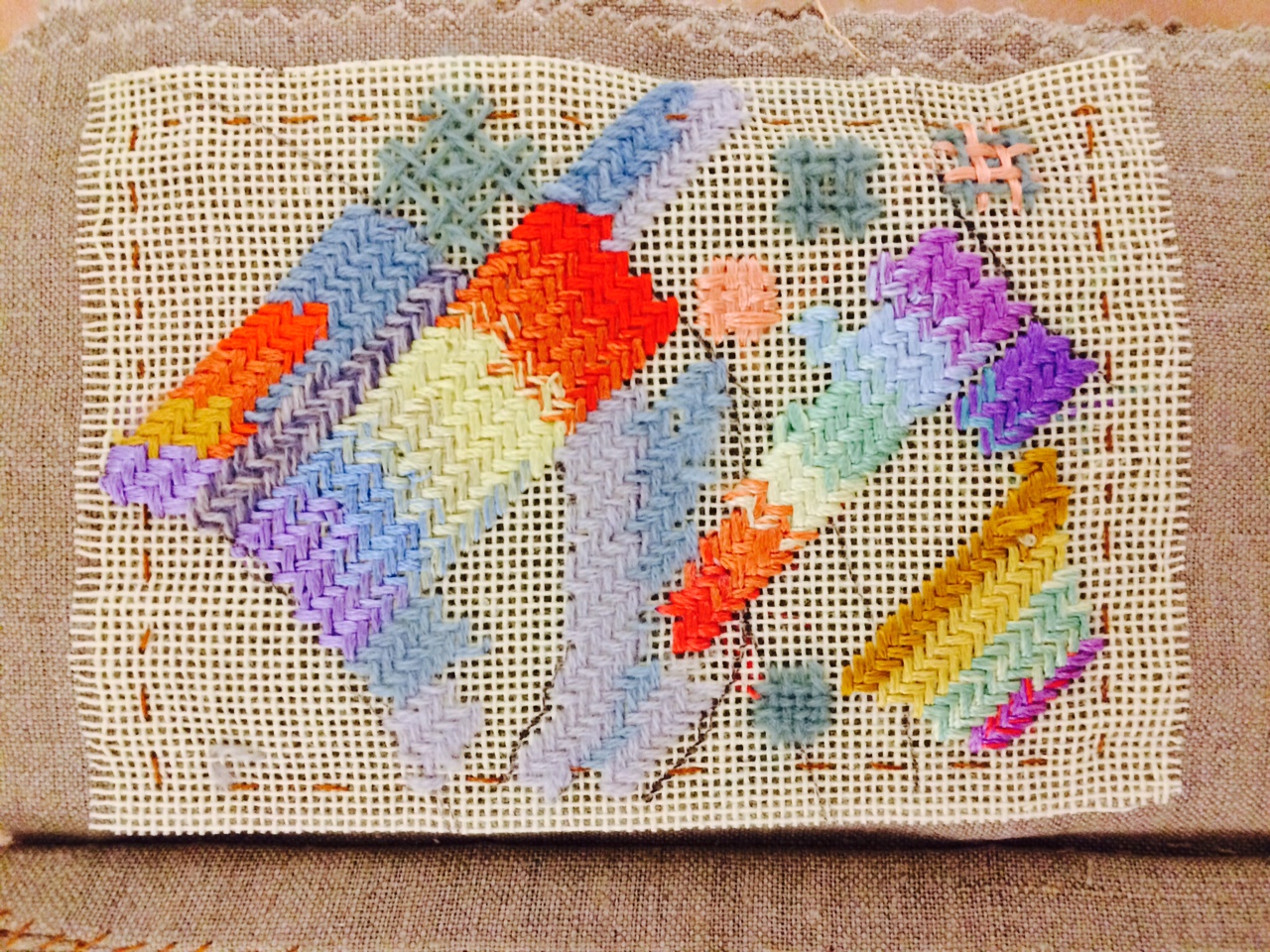
Detail of twentieth century stitching from box of from Happy Hands Studio (Pendelton, Oregon) from unique artist book by Roberta Lavadour called “Happy Hands”
 MME Designs's Weblog